
SUPERNATURAL FICTION · JAPAN AFTER DARK
In a Cup of Tea: He Swallowed a Stranger’s Face. That Night, It Came Back.
He changed the cup. He changed the tea. The face kept smiling. Then he drank it—and someone came to collect.
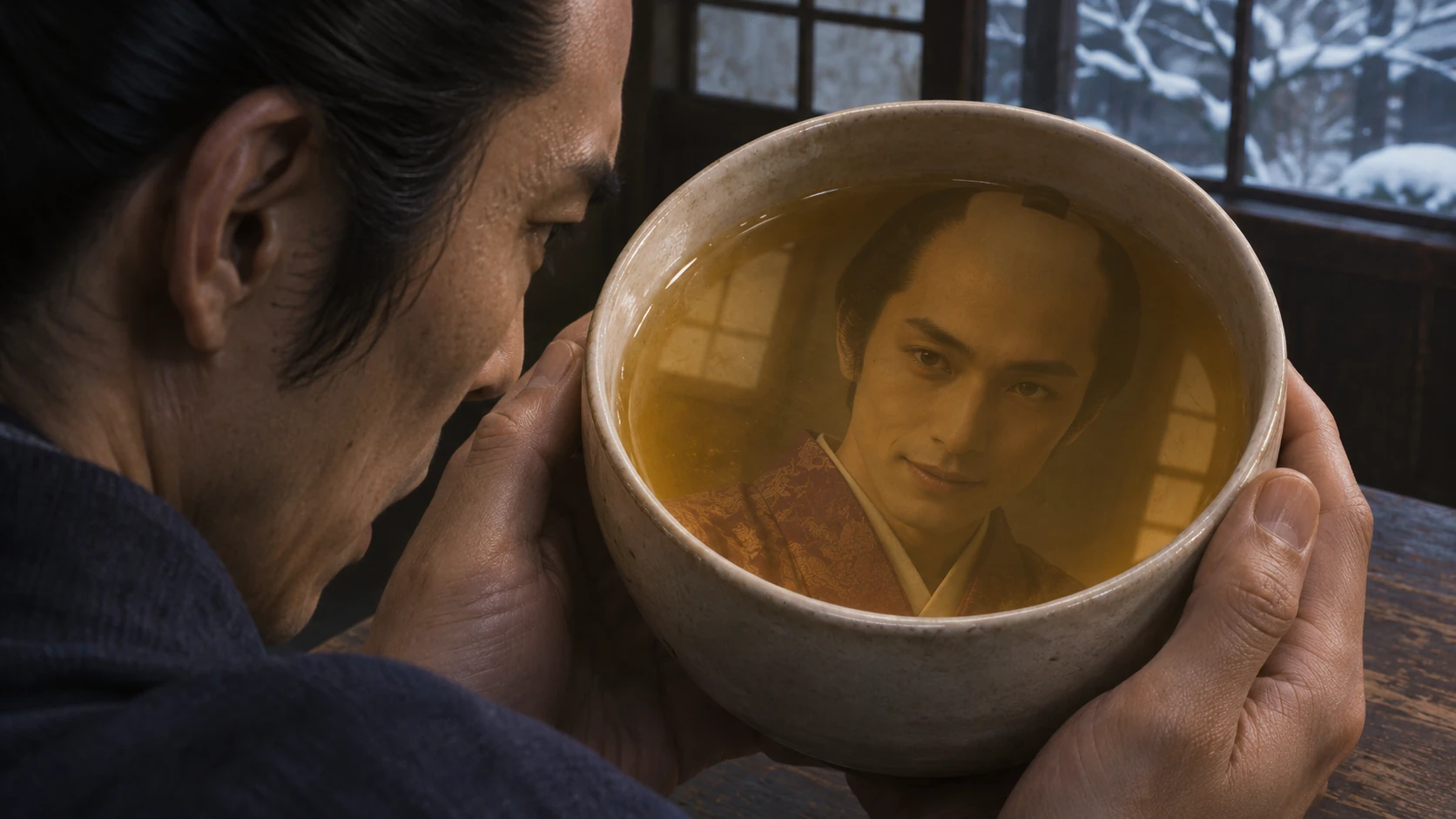
After the third appearance, Sekinai swallowed the face.
It had looked up at him from the tea: a handsome young man whose eyes and lips moved, although nobody stood nearby. Emptying the cup had not helped. Finding another cup had not helped. Fresh tea had brought the same face back, this time smiling at him. So Sekinai drank.
In Lafcadio Hearn’s literary ghost story “In a Cup of Tea,” published in Kottō in 1902, this small act of defiance starts something he cannot control. The horror is not that an object contains a spirit. It is that, after disposing of the object’s contents, a man discovers he has acquired an obligation.
Nothing wrong with the cup
The story begins during New Year visits in Edo, now Tokyo. Lord Nakagawa Sado and his attendants stop at a tea-house in Hakusan, in the Hongō district. Sekinai, one of his armed attendants, is thirsty.
Hearn makes the vessel deliberately ordinary: cheap, plain, without decoration. There is no painted face to mistake for a reflection, no elaborate antique announcing itself as cursed. Sekinai examines it. He changes what he can change. Each reasonable test leaves the unreasonable thing intact.
The face belongs to a young samurai, recognizable by his hairstyle. Its beauty makes the encounter more intimate than a glimpse of something monstrous. Someone is looking back. Someone appears to enjoy Sekinai’s confusion.
He refuses to be intimidated. But drinking the tea does not give him an explanation. He leaves wondering whether he has swallowed a ghost.
The visitor nobody admitted
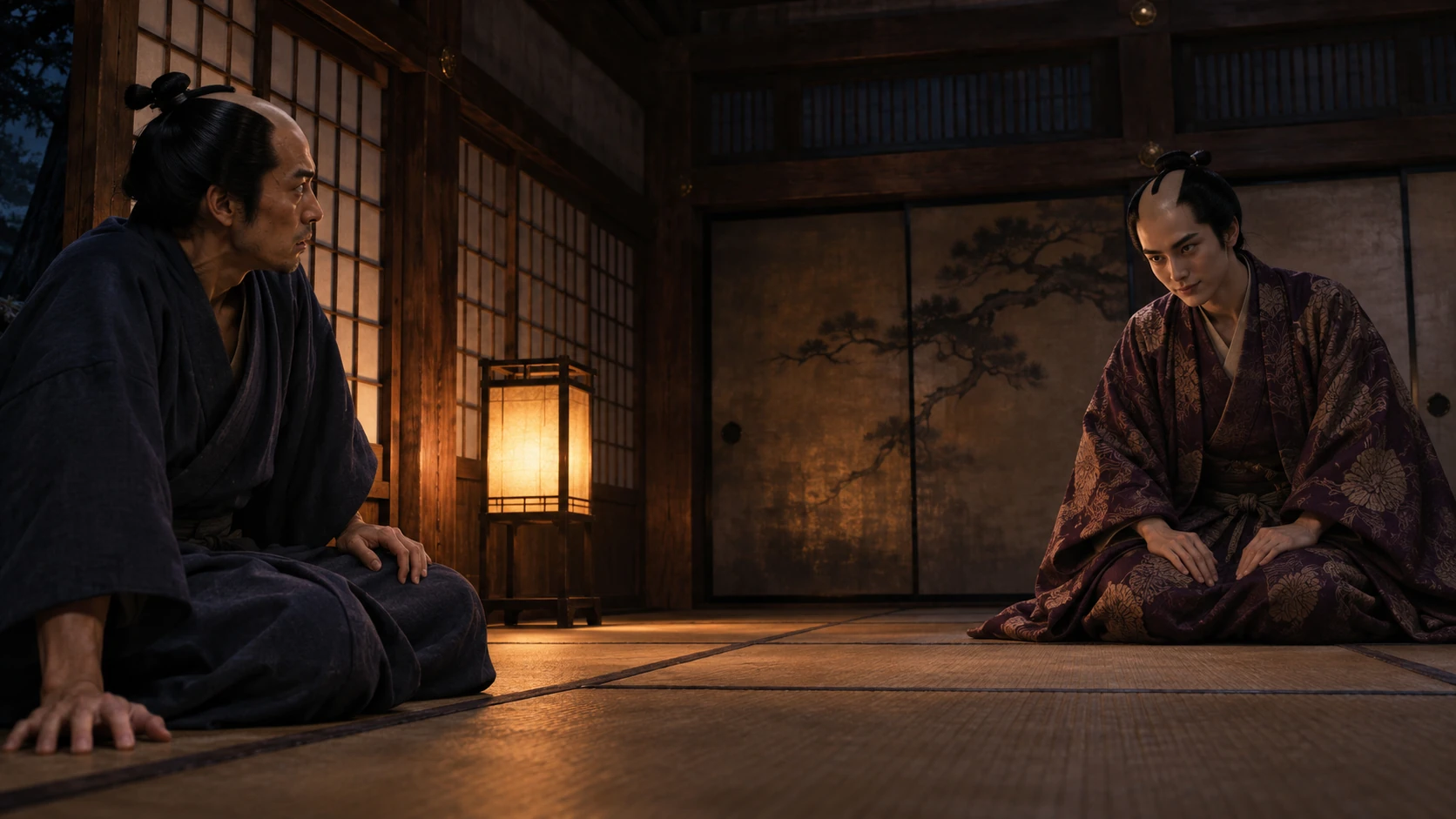
That evening, while Sekinai is on watch at his lord’s residence, a richly dressed young man enters without a sound. He sits directly before him, bows, and introduces himself as Shikibu Heinai.
Sekinai knows the face. It is the one he drank.
The visitor speaks as though they already have business together. Sekinai denies recognizing him and demands to know how he entered. Hearn pauses to explain the seriousness of that question: a lord’s residence is guarded. An unannounced stranger means a failure of the watch.
But the stranger is interested in a different breach. He accuses Sekinai of having grievously injured him that morning.
Sekinai answers with violence. He thrusts his short blade at the visitor’s throat, feels no resistance, and watches the man escape through a wall without leaving a mark. The other retainers have seen nobody arrive or depart. None knows the visitor’s name.
The first encounter could have remained a private disturbance at a tea-house. Now it has followed Sekinai into the place where vigilance is his duty—and made that vigilance useless.
Three men at the family door
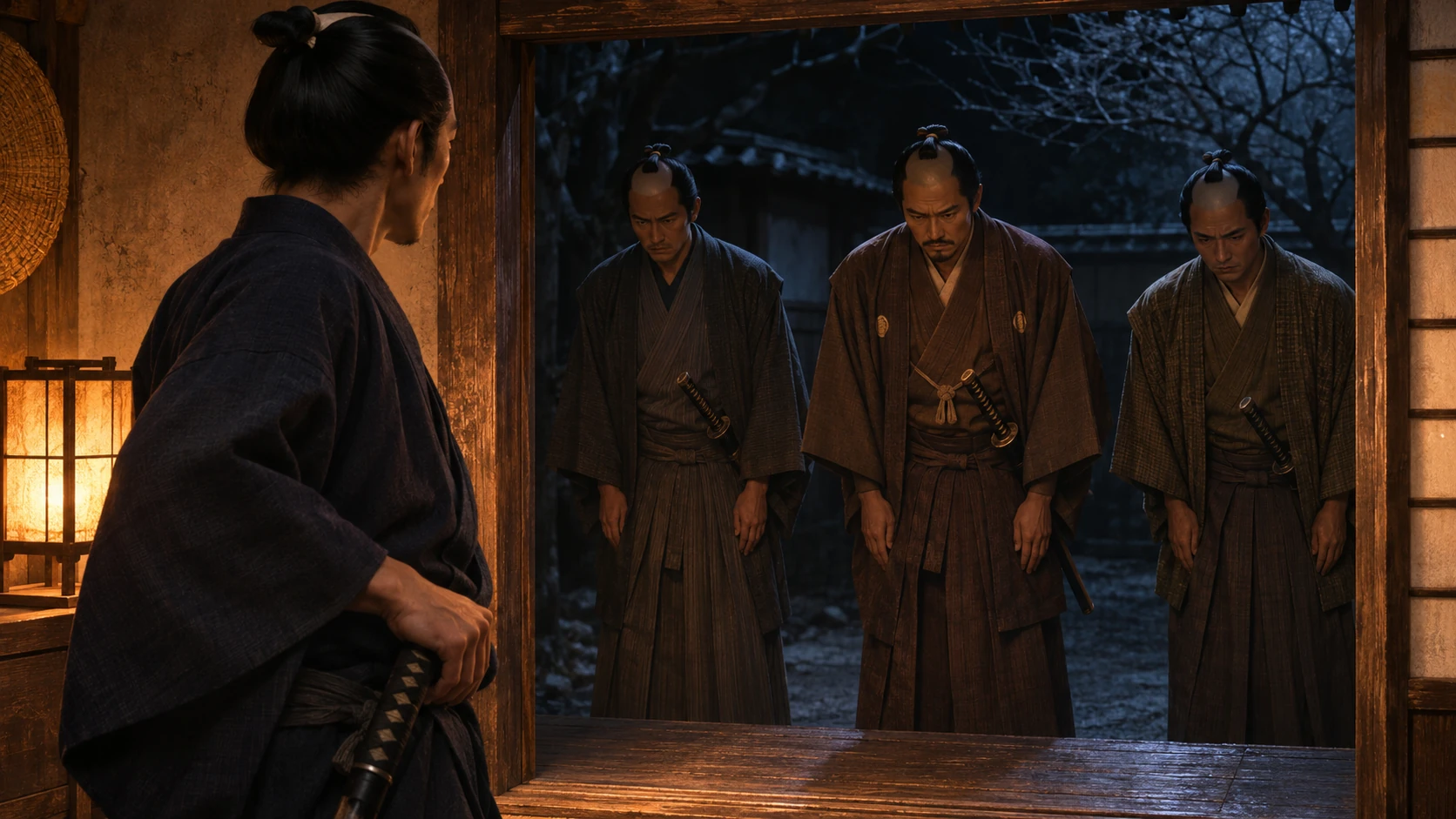
The following night Sekinai is off duty, at home with his parents, when three armed men call. They bow politely and identify themselves as Shikibu Heinai’s retainers.
Their message is almost unbearably practical. Their master, they say, was wounded during his visit. He has gone to hot springs for treatment. On the sixteenth day of the coming month, he will return and repay the injury.
Nothing in the message resolves what Sekinai saw. A blade that seemed to strike nothing has apparently caused a wound. A man who walked through a wall requires convalescence. The impossible has servants, formal manners, and a date in its diary.
Sekinai does not wait for more. He rushes out with his sword, striking at the messengers. They spring toward a neighboring building and move up its wall like shadows.
Then the narrative stops.
An appointment without an ending
Hearn frames this tale as an unfinished fragment from an old Japanese story-book. He offers possibilities for why a writer might stop, but no answer. Crucially, he refuses to supply the missing conclusion.
That refusal leaves the threat working. We never learn what happens on the appointed day. We never discover why drinking the apparition was an injury, or what repayment could possibly mean. Sekinai’s courage keeps taking the form of another attack, and every attack seems to create another grievance.
One way to read the story is as a nightmare of responsibility: you can be held accountable for an act whose meaning you never understood. The stranger explains just enough to demand an answer, never enough to let you defend yourself.
The cup is empty. The appointment still stands. If you had swallowed someone’s soul, what would you offer when he came to ask for it back?
Explore Japanify Ghost Tours for more encounters with Japan’s unsettling stories—and a different way of looking at the night.
Explore more unsettling stories in the Japanify Journal, or step into the night with Japanify Ghost Tours.