
SUPERNATURAL FICTION · JAPAN AFTER DARK
The Reconciliation: He Promised His Wife Tomorrow. She Was Already Dead.
He came home to beg forgiveness. His wife welcomed him, listened, and stayed beside him until dawn. Then he opened his eyes.
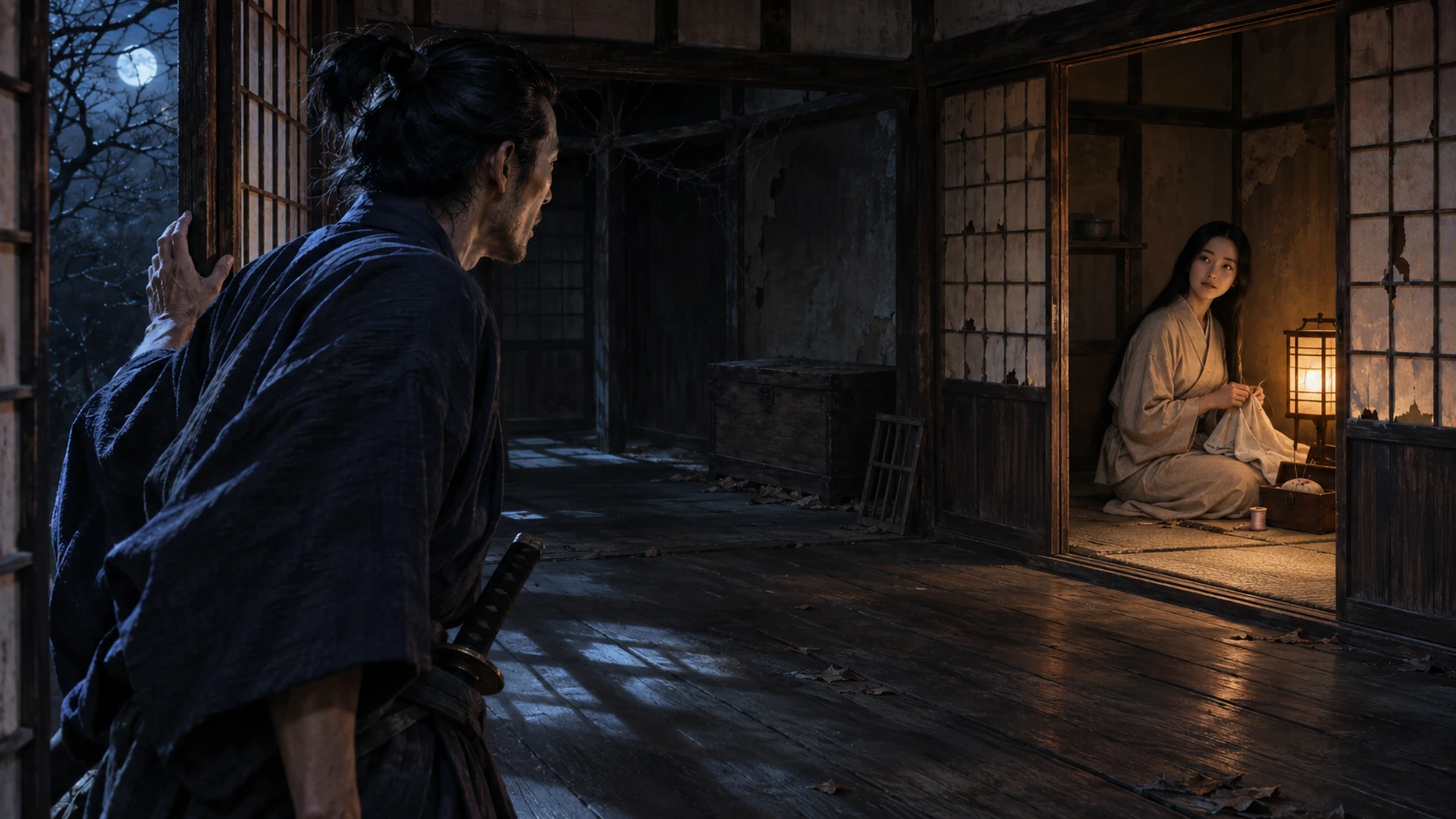
By morning, the woman who had spent the night forgiving him had no face left to recognize.
Hours earlier, she had smiled at him. He had promised to repair their house, bring servants, and never leave again. Now he was awake on rotting floorboards beside her remains. The future he had offered her had expired years before he arrived.
This is the terrible reunion at the heart of Lafcadio Hearn’s “The Reconciliation,” a literary ghost story published in Shadowings in 1900. Set in old Kyoto, it turns an apparently merciful homecoming into something harder to endure than an attack: the discovery that love has survived, but the chance to make things right has not.
The first betrayal was entirely human
The husband is a young samurai whose lord’s ruin has left him poor. Employment in a distant province offers a way out. Before leaving Kyoto, however, he makes another calculation: a wife from a more influential family might help his advancement.
He divorces the woman who has shared his hardship and marries someone better connected. Hearn makes the cruelty plain. The first wife had worked at her loom through their poverty. When an opportunity appears, the husband discards the person who helped him survive.
The new marriage is unhappy. His thoughts return to Kyoto, to the woman he abandoned and the life he exchanged for prospects. He imagines her alone and weeping. He decides that he will return and ask forgiveness.
But he lets years pass. His remorse occupies his thoughts long before it changes his actions.
A light where no one should be living
When his service finally ends, he sends his second wife back to her family and hurries to Kyoto. He reaches the old house late at night, on the tenth day of the ninth month.
Everything suggests abandonment. Weeds have grown on the roof. No one answers his knock. Inside, the rooms are empty, the mats gone, the walls damaged. He continues toward a small room his first wife used to favor.
There is light behind its screen.
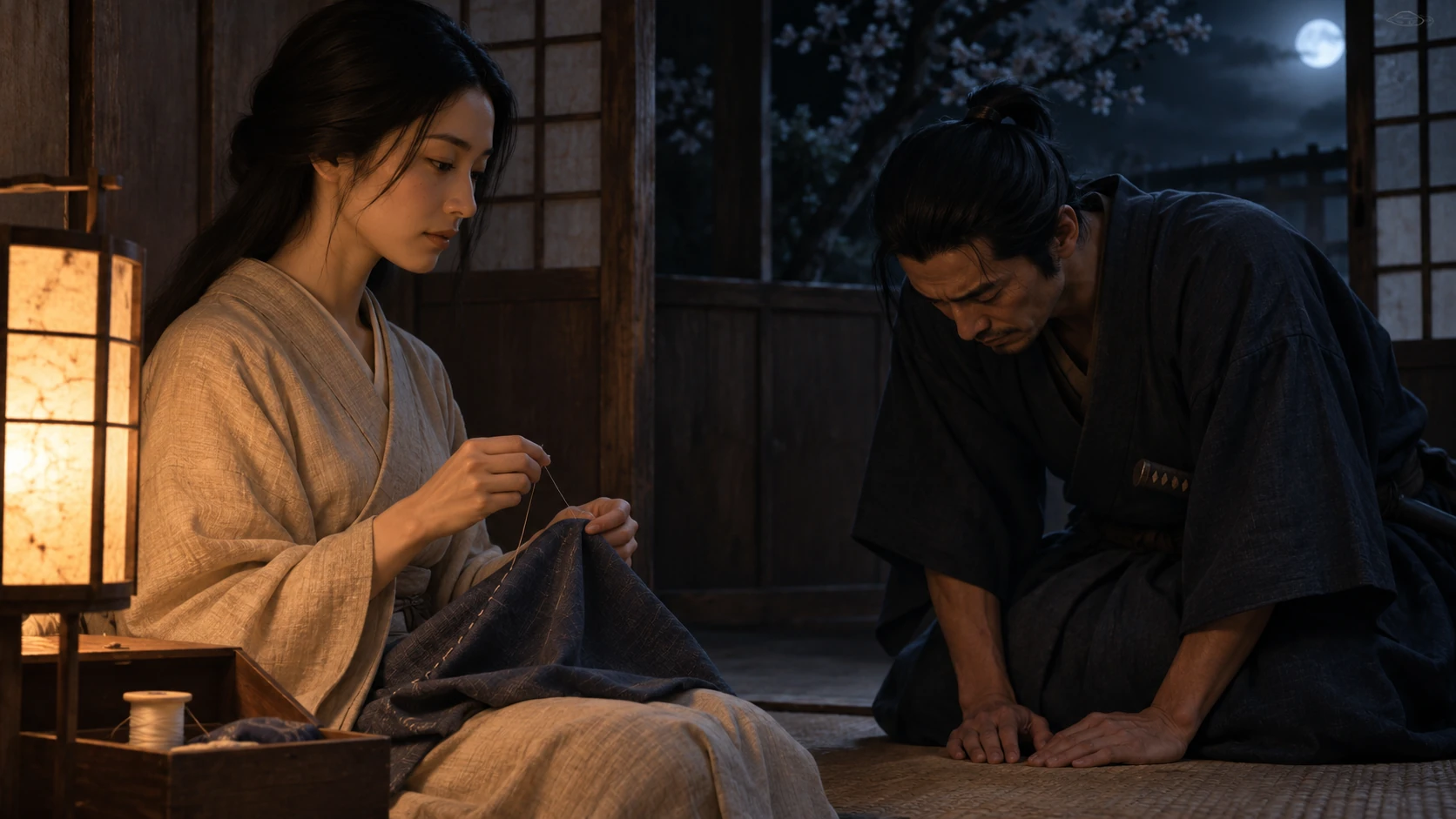
Inside, she is sewing beside a paper lamp. She looks as young as he remembers. Her greeting contains no accusation. After the ruined rooms, this small pocket of domestic life seems to offer him the impossible: a past that has waited intact.
He accepts it eagerly. The house has given him every warning. The woman gives him the answer he wants.
Everything he will do tomorrow
He confesses his selfishness and begs forgiveness. She comforts him. She excuses his departure as the consequence of poverty and tells him she has prayed for his happiness.
His promises gather speed. He has money now. His possessions and servants will arrive. The house will be made beautiful. Their separation is over.
She speaks about events in Kyoto, but refuses to dwell on her own suffering. Later, she prepares their old bridal room. When he asks about help in the house, she explains that she has lived alone because she could not afford a servant.
He answers with more promises for tomorrow.
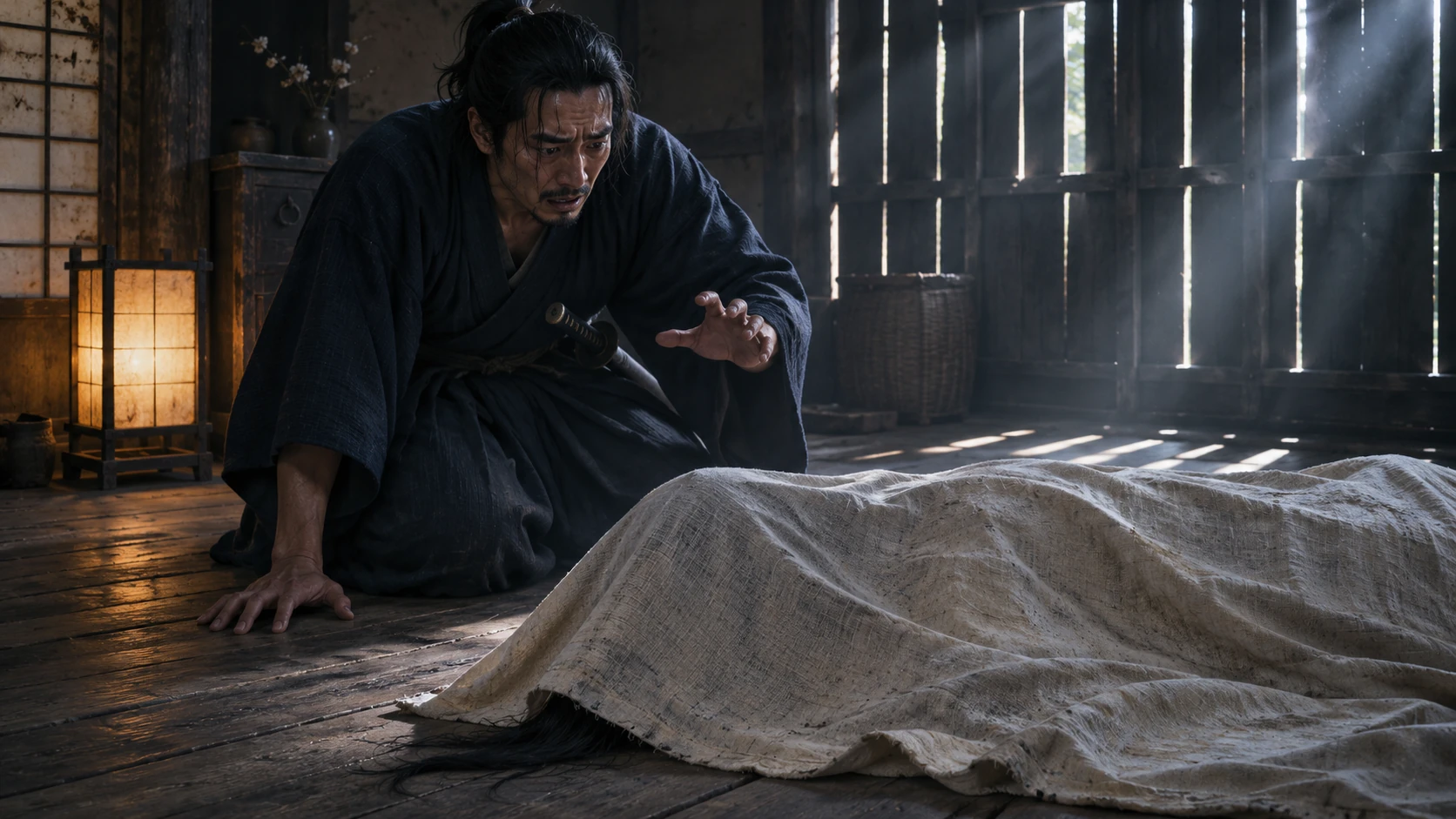
They talk until dawn. Then he sleeps. When he wakes, the room’s comfort has vanished. Beneath him are bare, decaying boards. Beside him is a body wrapped for burial, reduced to bones and tangled black hair.
Daylight has not rescued him from the haunting. It has taken away the illusion that made the haunting bearable.
The anniversary he did not know
Outside, he asks about the house while pretending not to know its history. The answer destroys his last refuge. The abandoned wife became ill, had no relatives in Kyoto to care for her, and died during the same year he left.
Her death fell on the tenth day of the ninth month: the date of his return, years later.
Hearn’s tale belongs to an older tradition of encounters between abandoned wives and returning husbands. A Waseda University essay by Nagao Ryūichi connects it to Tales of Times Now Past and raises a discomforting question about its forgiveness: how much of this reconciliation belongs to the husband’s own wishes?
That reading does not require us to decide whether the apparition is merciful or cruel. Her gentleness is precisely what makes the story hurt. He is allowed to hear that he is forgiven, then forced to confront the life his apology cannot restore.
If someone you abandoned welcomed you home without a word of anger, would you notice that the rest of the house had already died?
Explore Japanify Ghost Tours for more encounters with Japan’s unsettling stories—and the human fears that keep them alive.
Explore more unsettling stories in the Japanify Journal, or step into the night with Japanify Ghost Tours.